


Working Area
The programme works in five thematic areas:
Access to Quality Information and Counseling
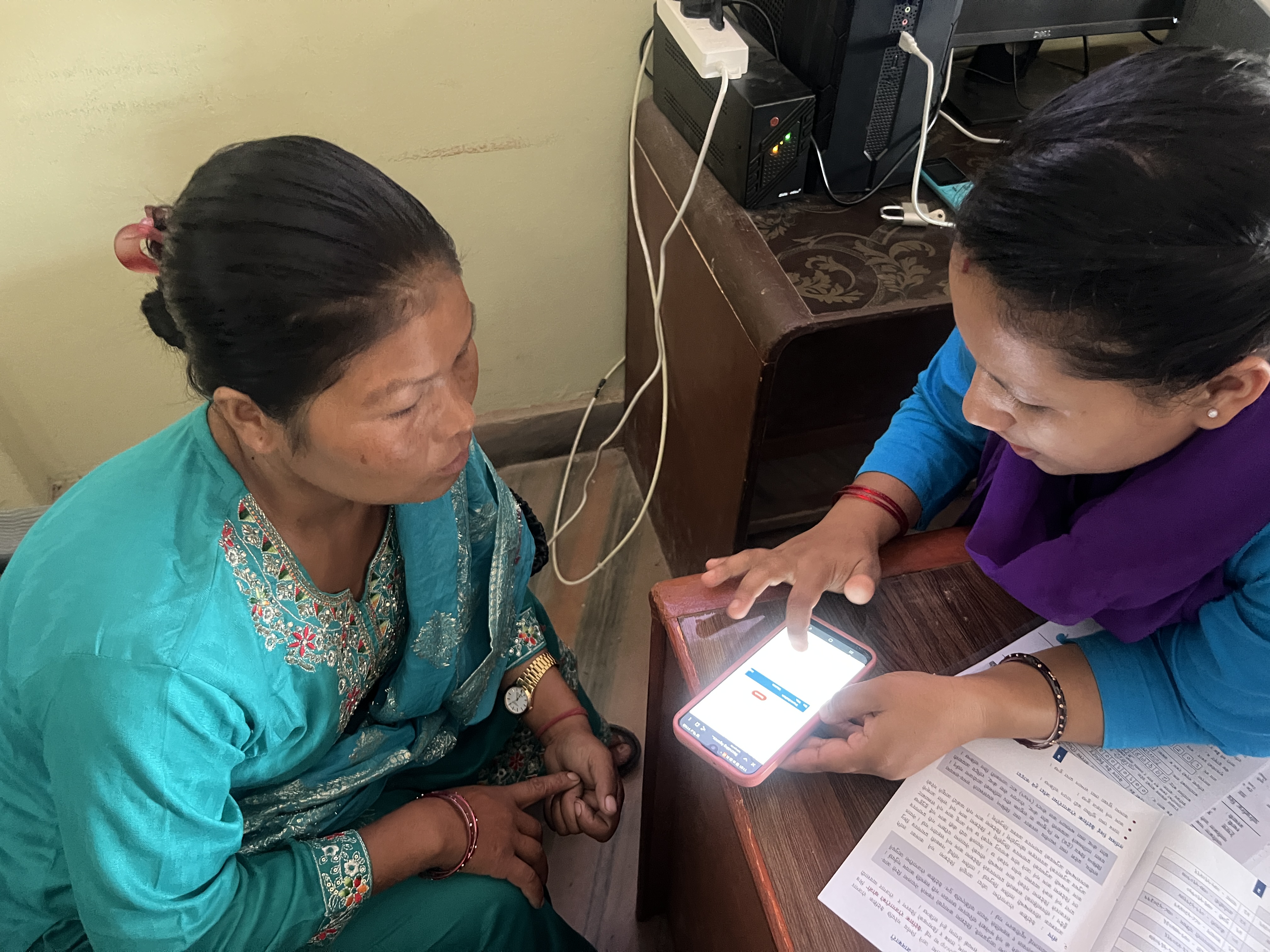
SaMi conducts various awareness activities to inform people about potential risks associated with foreign employment and to support informed decision making. Migrant Resource Centers (MRCs) have been established within District Administration Offices (DAOs) in all 77 districts of the country. In addition, subMRCs are operational within passport issuing Area Administration Offices. These centers provide potential migrant workers with essential information on foreign employment, raise awareness about available services, including access to justice, and help them connect to these services from the moment they visit DAOs to obtain passports.
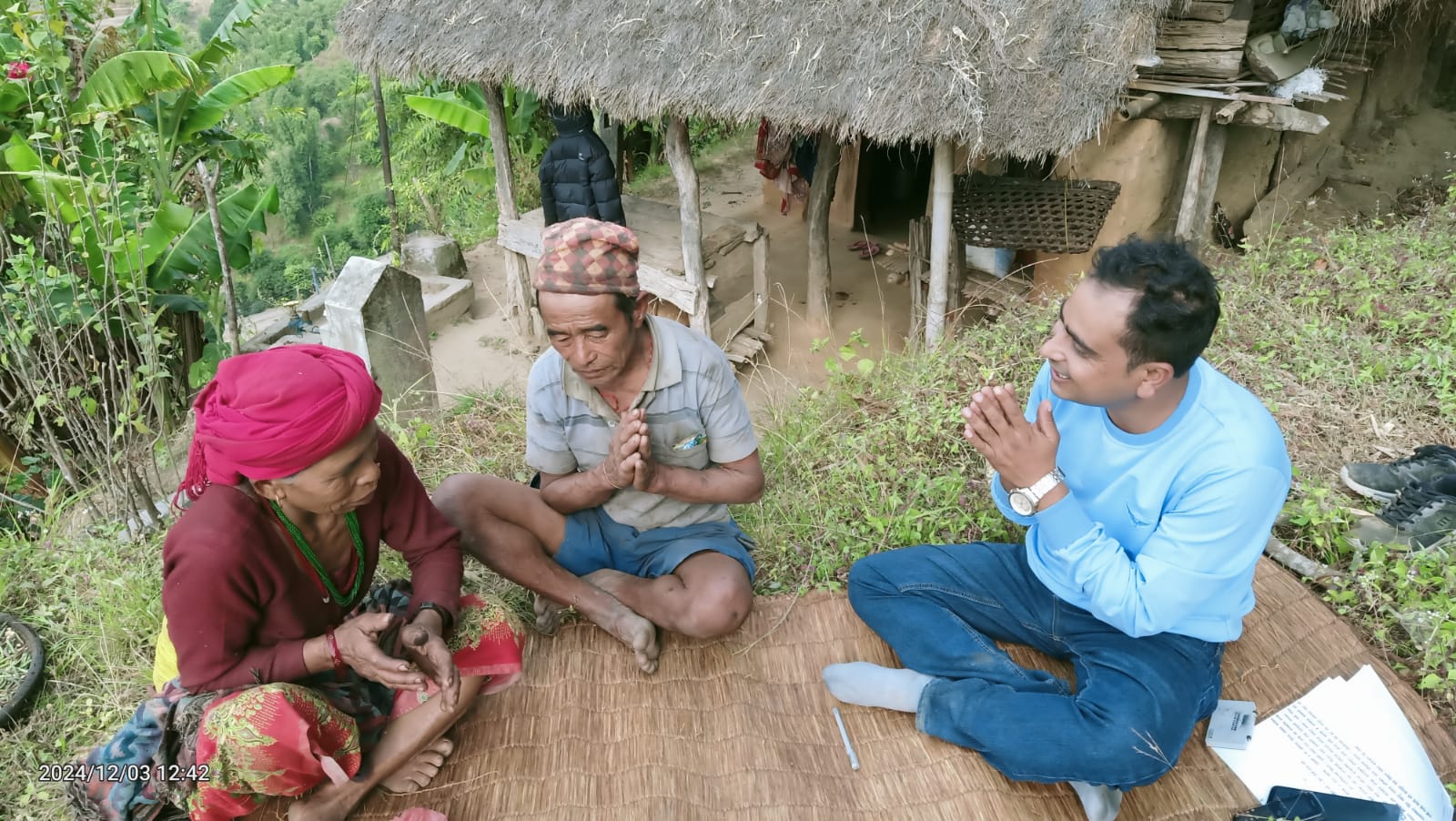
At the community level, the programme delivers orientations on safer foreign employment through Employment Service Centers (ESCs), returnee migrant workers mobilized as volunteers, and returnee migrant networks. SaMi strengthens the capacity of ESC staff to effectively implement community based awareness activities. Likewise, the volunteers and migrant networks share information drawn from their own foreign employment experiences and refer individuals or families facing migration related challenges to the relevant institutions for support.
Access to Justice Services
The programme supports and facilitates access to justice for migrant workers and their families who face legal or paralegal issues, including fraud and exploitation at any stage of the migration cycle. MRCs work in close coordination with the Chief District Officer (CDO) to support the mandate of addressing individual cases of financial fraud and ensuring that affected persons receive compensation. Additionally, they collaborate with key institutions such as the Department of Foreign Employment (DoFE), the Foreign Employment Board (FEB), the Department of Consular Services (DoCS), Nepali diplomatic missions, and other relevant stakeholders. Through this coordination, they help ensure that affected migrant workers and their families receive legal assistance, rescue support, and access to compensation and relief services.
Support for Psychosocial Counseling Services
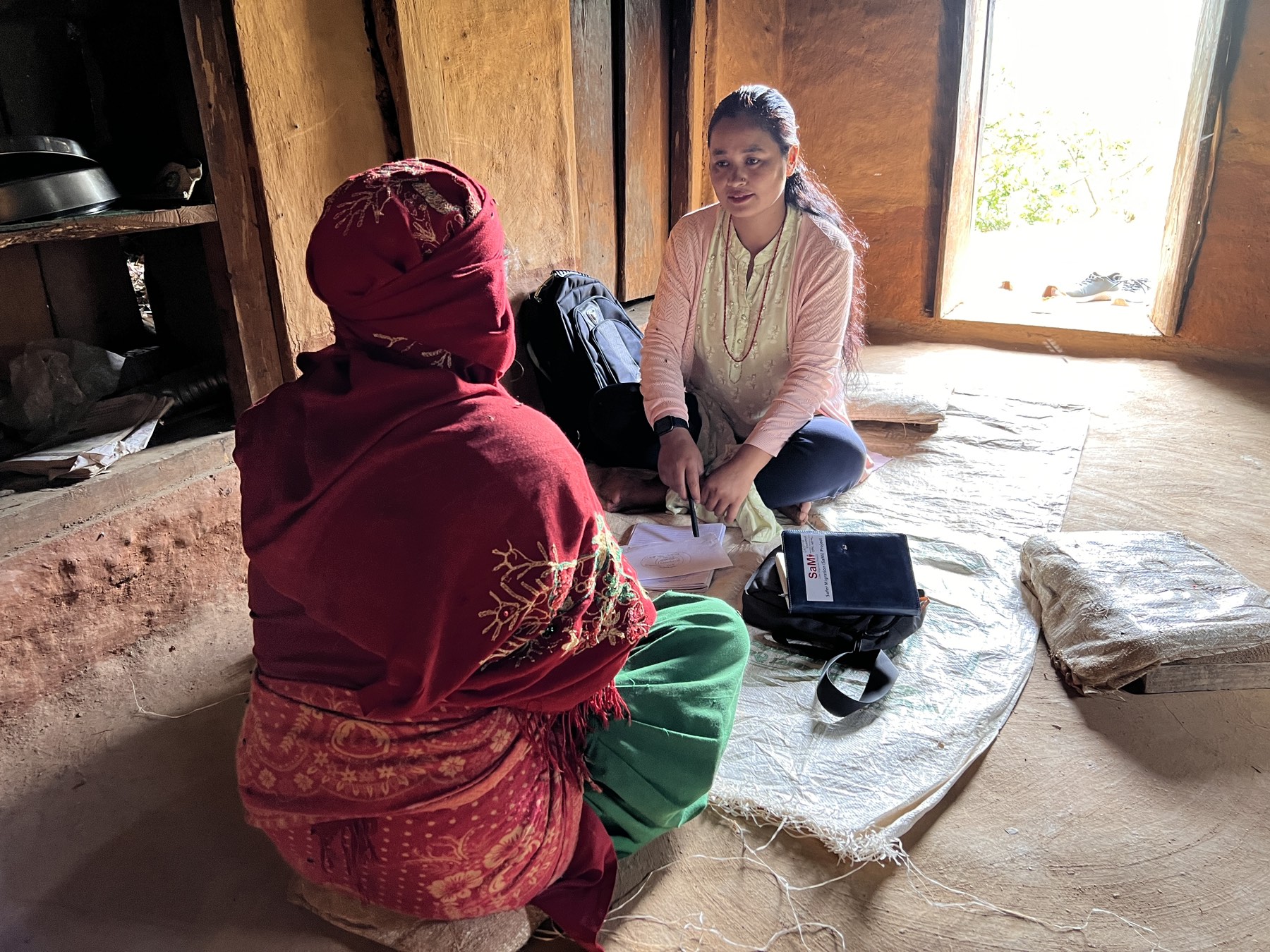
The programme provides psychosocial counseling services to migrant workers and their families to help address and reduce psychosocial problems arising from foreign employment. To deliver these services, local governments implementing the SaMi Programme appoint and mobilize psychosocial counselors. The programme works closely with federal and provincial health ministries, as well as provincial health directorates, to ensure service quality and strengthen counselors’ capacity. Similarly, the programme delivers intensive modular training to psychosocial counselors through provincebased health training centers, following a standardized curriculum. These counselors deliver psychosocial counseling services at the community level and through household visits. Additionally, psychologists mobilized at the provincial
level provide them with ongoing coaching, mentoring, training and monitoring support.
Skills Development
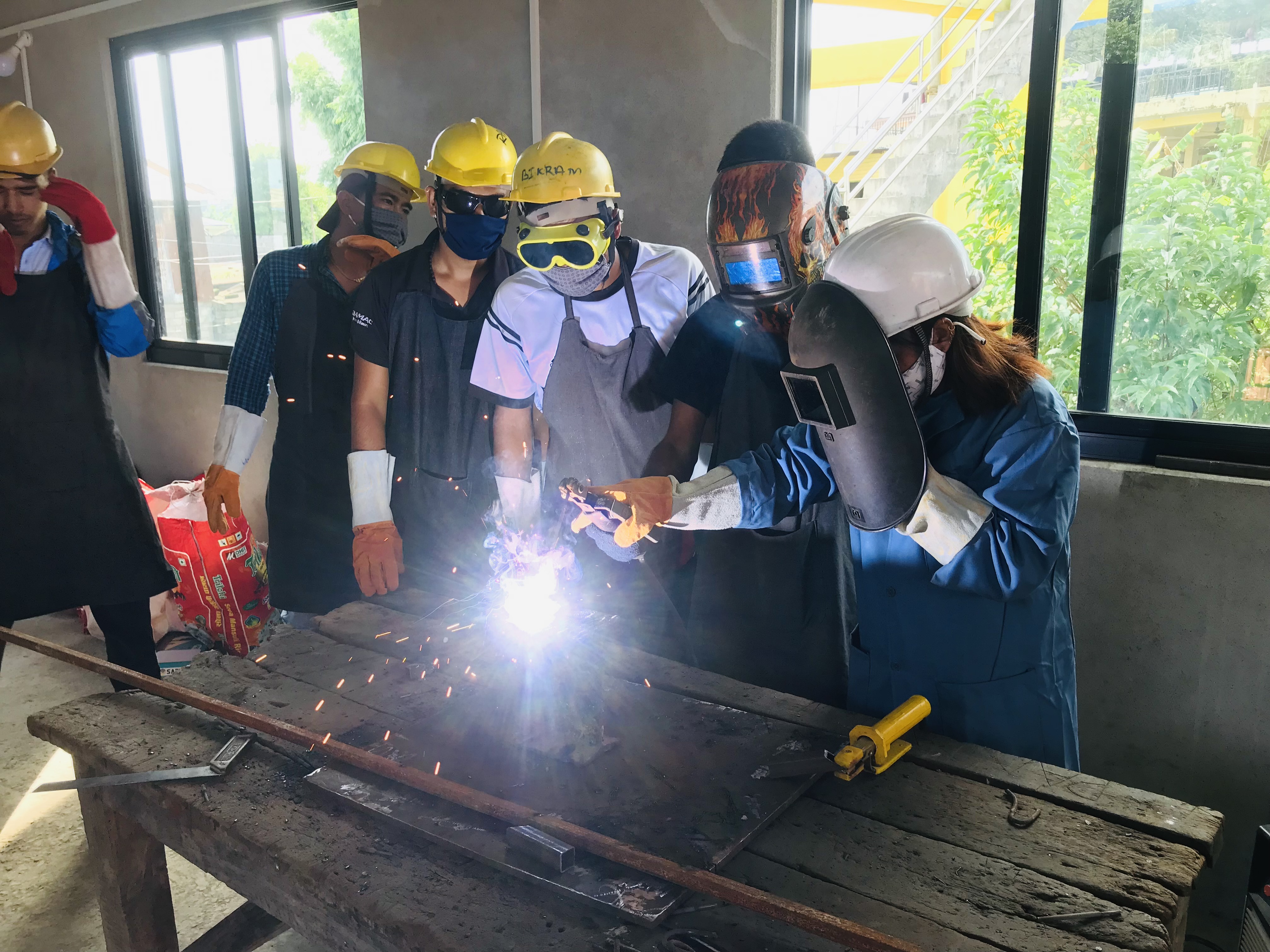
The programme encourages individuals planning to migrate for employment, as well as returnee migrant workers intending to re-migrate, to participate in skills development training. Such training enables migrant workers to enhance their efficiency and stability at work, broaden their opportunities and benefits, and reduce work place related risks abroad. Information on available skills development opportunities is disseminated through MRCs, community orientations, and the mobilization of returnee volunteers. MRCs also refer potential migrant workers to skills training programmes organized by the National Academy of Vocational Training (NAVT) and FEB. Drawing on its experiences in implementing vocational skills training, the programme further supports NAVT in developing relevant policies, procedures and curricula, as well as in strengthening institutional capacity to deliver foreign employ men targeted skills training.
Financial Literacy
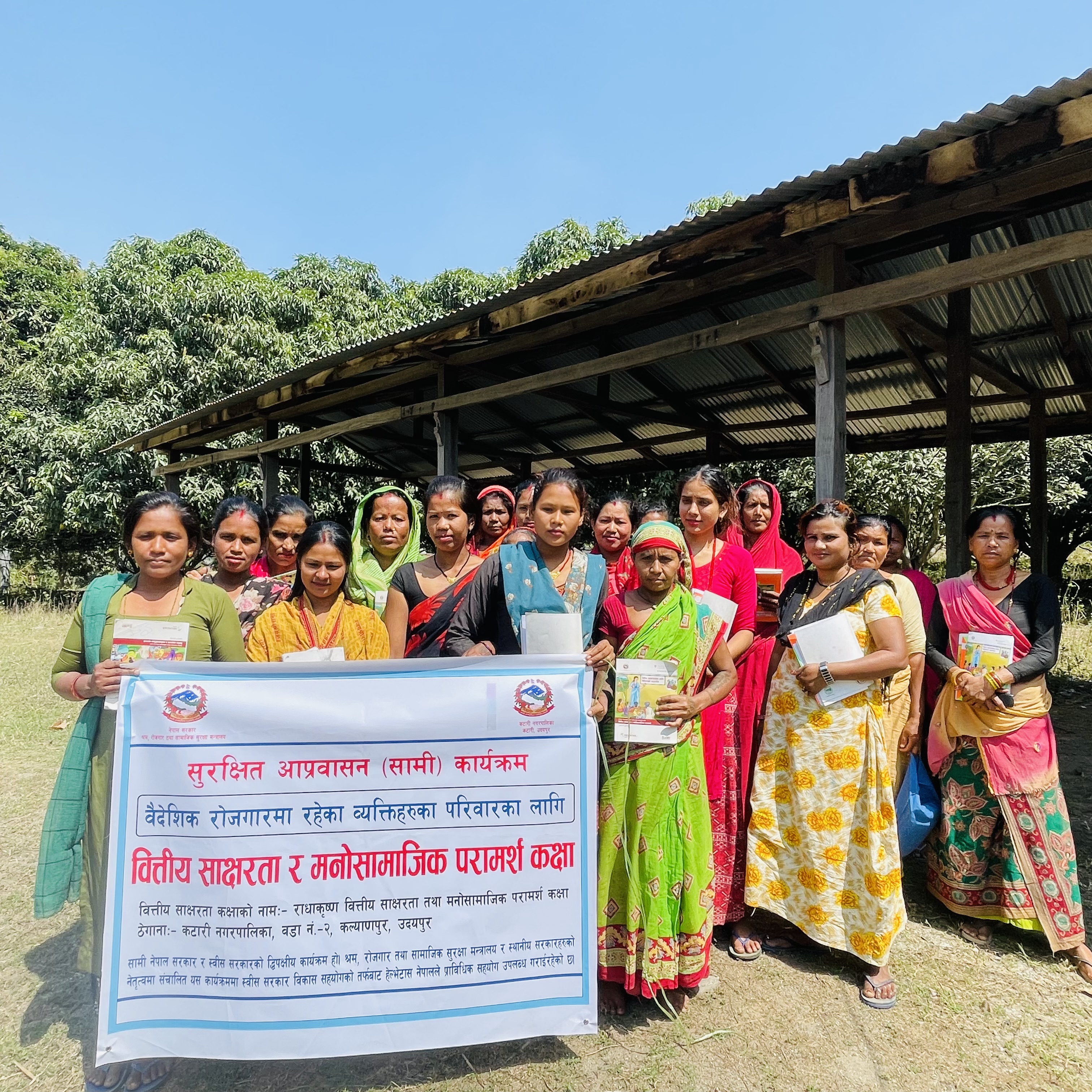
The programme conducts financial literacy classes in selected local governments using various modules. These classes aim to promote the effective use of income (remittances) generated through foreign employment and to support informed financial decision making. Lessons learned from previous phases, along with technical expertise in facilitating these classes, are being shared with the newly expanded local
governments to help them initiate classes using their own resources. Local governments mobilize financial literacy facilitators to deliver community level sessions under these modules, targeting students, youth and women. To strengthen the capacity of these facilitators, the provincial ministries responsible for the labor and employment sector lead efforts in capacity building and the development of essential resource materials.